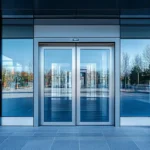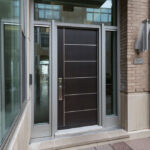

The word accessible in the Big Apple is a legal requirement that most building owners conveniently brush under the carpet. However, the Americans with Disabilities Act has, if anything, only intensified over the last couple of years.
Commercial entry doors in NYC sit at the very front of ADA compliance. These doors are the first barrier a differently abled person encounters when approaching a business. If you ace this, you’ve just created an entry that works for the elderly, parents with strollers, delivery workers with hand trucks and roughly 28.7% of American adults who live with some form of disability. If you get this wrong, however, you’ve created a barrier and a liability.
This guide covers exactly what ADA requirements mean for you as a business owner.
1. Door Width
The most fundamental ADA requirement for commercial entry doors is the clear width, which is 90 degrees when the door is fully opened. The ADA requires a minimum clear width of 32 inches for a single door in a doorway.
Clear width is measured from the face of the door to the face of the opposite stop when the door is open 90 degrees. For double-door entries, at least one leaf must meet the minimum clear width requirement.
2. Door Hardware
Door hardware, such as the knobs, handles, and latches, must all be regulated under ADA standards. The door hardware must be operable with one hand and shouldn’t require a lot of force. Round doorknobs, for example, fail this standard. They must be replaced with lever handles or push-and-pull hardware.
Hardware must be installed 34 to 48 inches above the floor so that it’s within the reach of a person using a wheelchair or with limited reach.
3. Door Opening Force
There’s a maximum force required to open a door, and that is 5 pounds of 2.2 kgs. Fire doors, however, are permitted to have higher opening forces of up to 15 pounds or 6.8 kgs. This is because fire doors need to maintain a certain fire rating and are, hence, an exception.
4. Door Closing Speed and Timing
ADA standards specify that doors with closers must not close too quickly and must remain open for at least 5 seconds when released from the 90-degree open position to the 12-degree position.
This timing takes into consideration the speed of a person with a walker, in a wheelchair or with a cane, and provides them enough time to move through the doorway before the door closes against them.
The 5-second timing and the 5-pound force requirement are challenging to meet. This is because a lighter closer that still reliably closes and latches typically needs more careful adjustment. This is why you can only trust a professional for the job instead of simply swapping out the hardware.
5. Thresholds and Floor Transitions
Threshold heights need to be regulated. Changes in level in the door opening cannot exceed ½ an inch in height. If the threshold is between 1/4 inch and 1/2 inch, it must be beveled at a 1:2 slope.
This is helpful in buildings where several flooring renovations have caused changes in thresholds and are now no longer code-compliant.
6. Automatic Door Openers
While automatic door openers aren’t required by ADA in all commercial buildings, they’re a great way to ensure that a door remains accessible regardless of force requirements or timing. Buildings that can take advantage of these include healthcare facilities, certain government buildings, and high-traffic public facilities.
Also Read: Is Your Commercial Door Up to Code? A Compliance Checklist
What Happens When You’re Not Compliant?
The worrisome part about ADA violations is that they’re privately enforceable. What that means is that if you run into such a violation, anyone who experiences the accessibility barrier can file suit without having to file an agency complaint first. You could either face hefty fines and/or a mandatory remediation order.
But beyond the financial implications, it’s worth considering that your reputation is at risk. A building that works for everyone basically serves a larger market. It’s probably one of the best business strategies out there.
If you’re not sure whether or not your commercial building meets ADA compliance codes, Door Master New York can help! We’ve got extensive experience with commercial entry doors in NYC, and we’ll make sure your doors are compliant and properly functioning.
Stop waiting around to find the problem first, or worse, face a lawsuit. Give us a call to schedule an assessment!